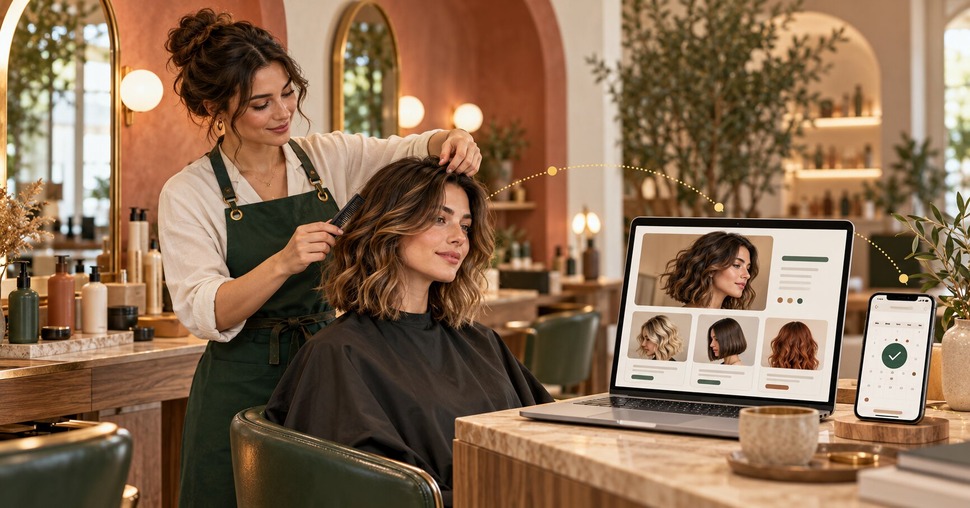
What Should a Hair Salon Website Include to Help Customers Book?
A salon visitor usually needs practical answers: which service fits, where you are, what it may cost, and how to book. The website should make those decisions comfortable on a phone.

Ideas for clearer websites, stronger enquiries, and simpler operations. Written for people running service businesses.
All articles →A salon visitor usually needs practical answers: which service fits, where you are, what it may cost, and how to book. The website should make those decisions comfortable on a phone.

A message asking “How much for a renovation?” rarely contains enough detail for a useful estimate. A structured enquiry can help you decide which projects deserve a site visit.
Website traffic can look encouraging while your inbox stays quiet. Before buying more traffic, check whether a visitor can understand your service, trust your business, and take the next step without guessing.
Clearer offers, stronger enquiries, and less manual work.
Help local customers request and schedule the right service.
Bring more clarity to estimates, projects, and changes.
Turn a strong portfolio into a clearer client journey.
Make choosing a service and booking a visit easier.
Help travelers move from questions to a well-organized trip.
Travel agency websites need to connect destinations, trip options, practical information, and an appropriate enquiry. Keep that path clear even when the catalog grows.
Salon visitors should quickly find the service menu, location, and booking route. Structure the site around those tasks rather than making people search through long visual sections.
A photography website should balance visual exploration with clear service decisions. Keep navigation simple enough that clients can move from relevant work to an enquiry.
Contractor websites need to answer practical questions about fit, scope, responsibility, and next steps. Structure the pages so different project types have appropriate proof.
Home service websites should help customers move from a specific need to an appropriate request. Clear service and coverage information matters more than a large menu.
A useful website structure follows customer decisions: what you do, whether it fits, why they can trust you, and how to proceed. It does not need many pages to do that well.
I’m Boyke Berry Nugraha, a Senior Software Engineer and Technology Partner helping businesses turn operational challenges into useful digital products.
Work with me ↗